
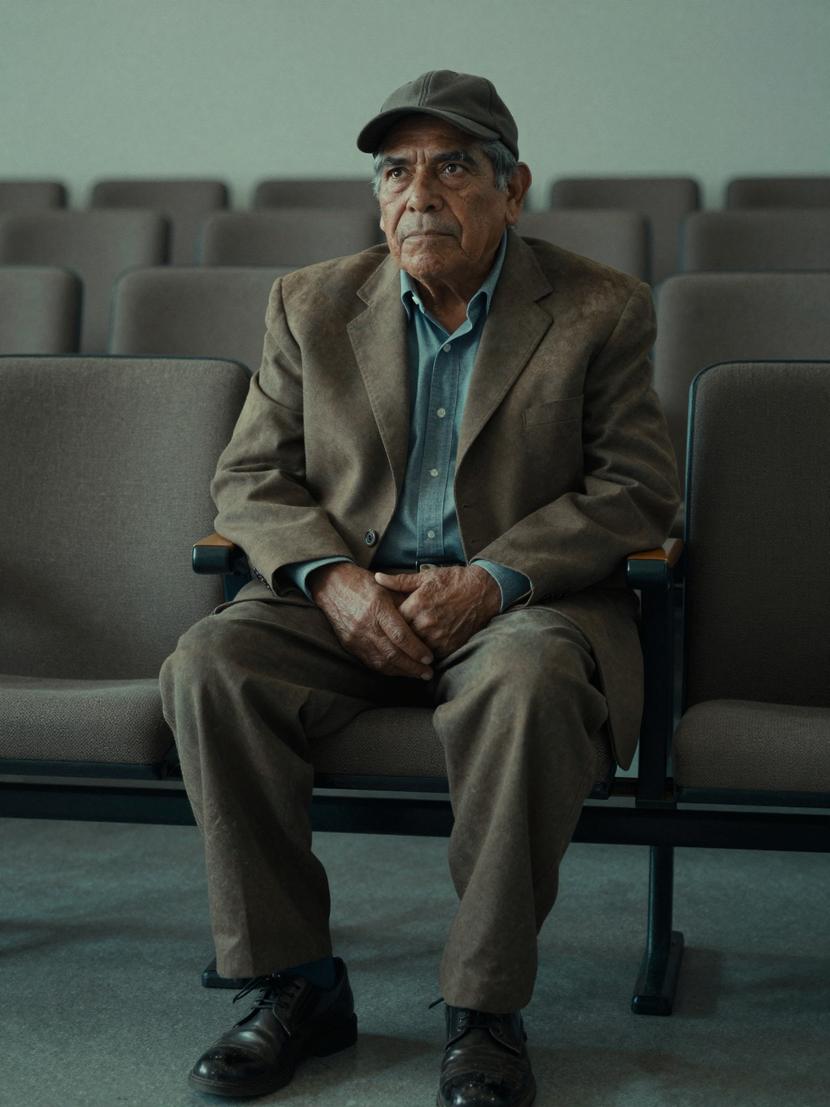
The auditorium buzzed with the subtle scent of polished wood and freshly pressed programs, the air thick with anticipation. Years of imagining this exact moment bubbled within me like a quiet storm. Yet, as the applause dimmed and the spotlight shifted, it wasn’t my freshly minted PhD that captivated the room. Instead, all eyes slowly gravitated towards the last row, where a solitary figure sat—leaning forward, unwavering in his gaze. That was Ricardo Morales—my stepfather—the silent architect of my future long before I dared to dream of a doctorate.
My early years in Santa Loma were anything but a fairy tale. My mother, Isabel, had left my biological father during my toddler days. His face blurred into an indistinct shadow, replaced by memories of hollow rooms and questions hanging unanswered in the stale air. Santa Loma, with its endless rice paddies and sunbaked streets, was a place where love was measured in brief returns and the modest warmth of a meal shared.
When I was four, Isabel married again—enter Ricardo. He carried no silver spoon, no promise of wealth or prestige. Instead, he arrived with a worn-out toolbox, hands toughened by decades of relentless labor, and a spirit shaped by endurance. At first, I resented him deeply. His hands smelled perpetually of mortar, his boots left dusty trails through our small home, and his stories revolved around distant construction sites I couldn’t even begin to visualize. Slowly, though, I began to decipher the language of his quiet love. He mended my battered bicycle, sewed patches onto my tattered sandals, and would bike countless miles on his wobbly old bicycle to rescue me when bullies cornered me after school. Ricardo never shouted or scolded; his words came soft, but they lingered, once whispering a truth I’ll never forget:
— “You don’t owe me the name ‘father,’ but I’ll always be here whenever you need me.”
From that moment on, calling him “Dad” felt as natural as breathing.
Our life together was simple yet rich with unspoken meaning. I remember the ritual—him stepping through the door each evening clad in a uniform dusted with grime, weary, but with a gentle question:
— “How was school today?”
He couldn’t solve my calculus problems or analyze poetry, but he planted a seed that grew with every passing day:
— “Knowledge is a treasure no one can steal. It will open doors money never can.”
Though our home was humble, Ricardo’s unwavering determination became my bedrock. The day I passed the entrance exam to Azul Valley University, Isabel wept tears of pride. Ricardo, ever silent, sat on the porch with a cigarette’s fragile smoke curling into the dusk. The next morning, he sold his only motorcycle, pooled Isabel’s savings, and packed the essentials for my leap to the city life. Weathered hands pressed a humble box into mine—filled with rice, dried fish, and roasted peanuts—and with a steady voice, he urged:
— “Work hard, son. Every lesson counts.”
Nestled within the lunchbox, wrapped carefully in banana leaves, lay a folded note:
— “I might not know your books, but I know you. Whatever path you take, I will stand by you.”
Throughout my undergraduate years and the grueling climb of graduate school, Ricardo remained unchanged. Each day, he ascended scaffolding, lifted bricks, his back curving more under the weight of time and labor. Whenever I returned home, I would find him wiping sweat from his brow at some construction site, seemingly carrying my dreams alongside every heavy load.
I never told him enough how deeply his resilience inspired me. The journey to my PhD was brutal—often lonely—but perseverance was a language Ricardo taught me, long before I could speak it.
On the morning of my dissertation defense at University of Sierra Monte, I urged Ricardo to come. Hesitant, he borrowed an old suit, shined shoes that pinched his feet, and bought a secondhand cap from a street vendor. Sitting in the back row, he straightened his posture despite the ache in his spine, eyes locked on me with unwavering pride.
After I finished, Professor Julio Ramirez approached the attendees one by one. When he reached Ricardo, he paused, squinting as if a long-lost memory flickered to life. A slow, heartfelt smile spread across his face:
— “Ricardo Morales, isn’t it? I grew up near a construction site in Cruz District. I remember a man who carried an injured coworker down scaffolding despite his own pain—that was you, wasn’t it?”
Ricardo nodded, humble as ever. Professor Ramirez’s voice thickened with emotion:
— “I never imagined I’d see you again. And here you are, the proud father of a new PhD. It’s an honor.”
Turning around, I caught Ricardo’s smile, his eyes glistening in a way that spoke volumes. At last, I understood something profound—he never sought recognition or reward. The seeds he quietly planted through years of sacrifice had blossomed, not for him, but through me.
Today, I teach at Azul Valley University. I’m married, with children of my own. Ricardo has long since retired from construction. He tends a small garden, raises chickens, reads the paper each morning, and pedals his bicycle around the neighborhood. Often, he calls to boast about his tomato plants or drop off fresh eggs for my kids, his voice still filled with that familiar warmth and humor:
— “Do you regret all those years of hard work for your son?” I once asked.
He laughed, deep and content:
— “No regrets. I built my life, yes—but what I’m proudest of is building you.”
Watching his hands now—tapping across a phone screen—those very hands that lifted bricks and bore burdens for decades, I realize a truth unmistakable and clear:
I may hold a PhD, but Ricardo Morales is the true builder. He didn’t just raise walls—he built a life. One lesson, one silent act of love at a time.


