
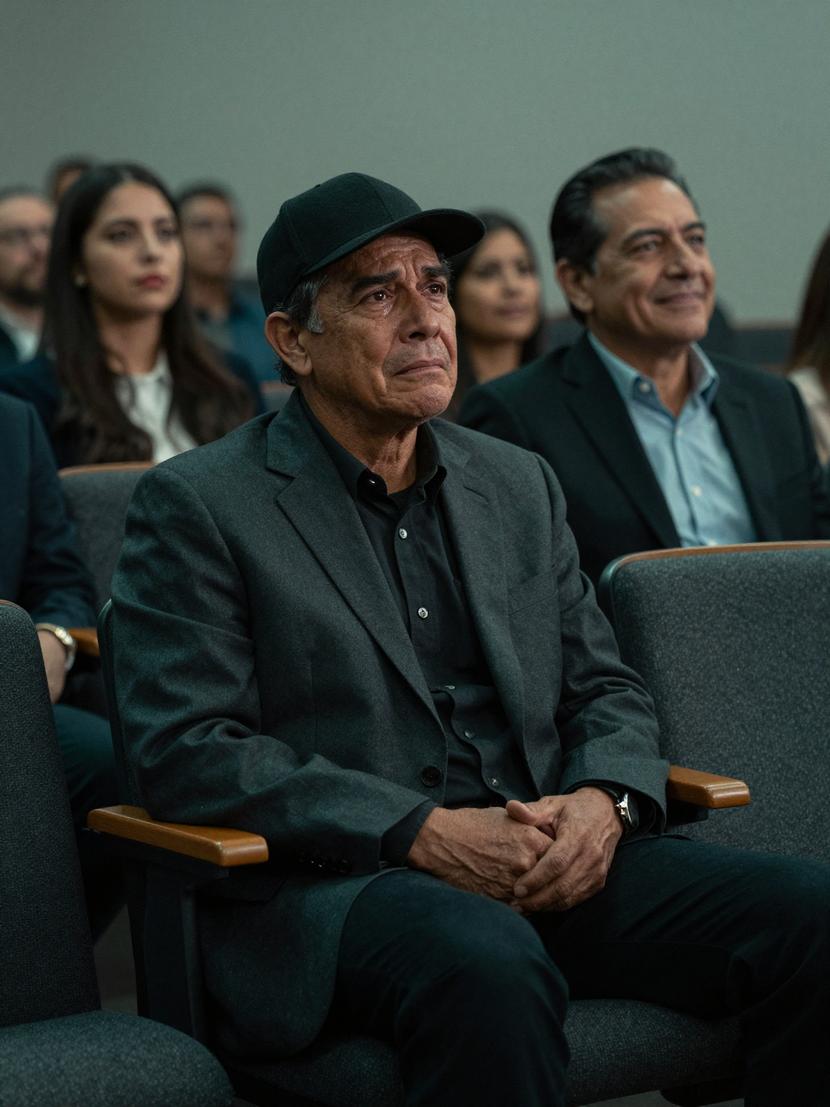
The auditorium buzzed softly with anticipation, a mingling of excitement and the faint scent of polished wood mingling with fresh ink from countless printed programs. Years of dreaming had led me here, yet when the applause settled, it wasn’t my doctorate scroll that captured the crowd’s eye. It was the unassuming figure seated in the dim back row, leaning forward with unwavering eyes fixed on me. That man was Raul Mendoza—my stepfather—the silent architect of my journey long before I ever dared imagine a PhD.
My childhood in the humble expanse of Valle Serena was a canvas painted with struggle and scarcity rather than comfort. My mother, Mariana, had walked away from my biological father when I was just a toddler. His face blurred over the years, replaced by the echo of hollow rooms and the sting of unanswered questions. Valle Serena’s dusty streets and endless rice fields whispered stories of toil and modest living, where affection was weighted in meager homecomings and the simple grace of a shared meal.
When I was four, Mariana married again. Raul brought no riches, no glamorous titles—just a battered toolbox, hands calloused like worn leather, and a back bent from decades of labor under the blazing sun. At first, I resented the constant smell of mortar clinging to his skin, the trail of dust his heavy boots left on our floors, and his conversations filled with job sites I could hardly picture. But day by day, his quiet love took shape in small acts: he repaired my battered bicycle, patched my torn sandals, and pedaled his rickety bike countless miles to rescue me from schoolyard bullies. He never raised his voice or offered empty lectures. One evening, his gentle words etched themselves into my heart:
— “You don’t have to call me father, but know this—I’ll always be here when you need someone.”
From that moment on, saying “Dad” felt like breathing.
Life with Raul was simple but rich with meaning. I remember the worn door creaking open every evening, revealing him in a dirt-streaked uniform, exhaustion evident, yet eyes bright as he asked only:
— “How was school today?”
He couldn’t tutor me in calculus or literature, but his relentless words fueled me:
— “Knowledge is a treasure no one can steal. It unlocks doors money can’t even knock on.”
Though our home was modest, his steady determination gave me roots and wings. When I passed the entry exam for Central Heights University, Mariana cried tears that tasted like pride. Raul, however, sat silently on the porch, smoke curling from a cheap cigarette, the quiet hero in my story. The next morning, he sold his only motorbike, combined that money with my mother’s savings, and meticulously packed everything I would need for the move to the city. With hands rough as bark, he handed me a humble box filled with rice, dried fish, and roasted peanuts.
— “Work hard, son. Make every lesson count,” he urged.
Hidden inside that lunchbox, wrapped in banana leaves, was a note folded like a secret promise:
— “I may not know your books, but I know you. Whatever path you choose, I will always be with you.”
Through every late night study session and exhausting exam during my bachelor’s and graduate years, Raul remained unstoppable—climbing scaffolds, carrying bricks, his back bowing more with each passing season. Whenever I visited home, I found him at some construction site, forehead gleaming with sweat, silently lifting burdens both material and invisible as if he carried my hopes alongside the stones.
I never found the words to tell him how deeply he inspired me. The grueling journey to a PhD tested every limit I had, but perseverance was a language Raul spoke long before I even learned to read.
On the morning of my dissertation defense at the University of Santa Loma, I begged Raul to come. Hesitantly, he borrowed a suit that hung loosely on his frame, shined shoes that pinched his feet, and wore a brand-new cap from the market. Sitting stiffly in the back row, despite the ache in his spine, his eyes never left me.
When I finished, Professor Diego Navarro walked the room, greeting each attendee. Upon reaching Raul, he paused, eyes narrowing with recognition. Then, a slow, heartfelt smile spread across his weathered face:
— “You’re Raul Mendoza, aren’t you? I grew up near a construction site in the Rincon District. I remember a worker who carried a colleague down scaffolding even while injured himself. That was you, wasn’t it?”
Raul nodded quietly, humility etched deep into every line of his face. Professor Navarro’s voice thickened with emotion:
— “I never imagined I’d see you again, especially here, as the father of a new PhD graduate. It’s an honor I won’t forget.”
I glanced back to find Raul smiling, eyes shimmering with unshed tears. In that moment, I truly understood: He sought no praise, no spotlight. The seeds sown through years of quiet sacrifice had bloomed not for him, but through me.
Now, I teach at Central Heights University. Married with children of my own, Raul has retired from the relentless rhythms of construction. He tends a garden bursting with vegetables, raises clucking chickens, and reads the morning paper by the sunlit window. More often than not, he calls with news of his tomato plants or offers fresh eggs to my kids—still joking in that warm, raspy voice that built my world.
— “Do you ever regret all those years of hard work for me?” I asked once.
He chuckled, deep and content:
— “No regrets. I built my life, yes, but what I’m proudest of is building you.”
Watching his hands dance across a phone screen, those same hands that lifted bricks and burdens for decades, I see an undeniable truth.
I hold a PhD now, but Raul Mendoza is the true builder. He didn’t just raise walls—he built a life. One lesson, one selfless act of love at a time.


