
I was still in uniform, the fabric strained against my swollen knee, my boot half-unlaced, the throbbing pain radiating up my leg, when my father’s voice cut through the line, cold and unyielding. “Your leg isn’t worth five thousand dollars,” he said, almost with a strange kindness. The doctor’s word still echoed in my mind—disability. Not a threat, but a verdict, if surgery didn’t happen within the week.
Two hours away from home, during what was supposed to be routine training, everything had changed in the instant that sharp, wet pop erupted from inside me. The searing heat, followed by the world tilting, then the ground rushing up too fast. Pain was nothing new in the military; we train to endure it, to ignore discomfort and push on. But this pain? It was a thief, stealing breath and sense.
I tried to stand, only for my leg to betray me, folding as though it belonged to someone else. The medic’s voice was grave: “Don’t move.”
At the clinic, the harsh white lighting buzzed overhead as I lay with my leg swelling visibly beneath torn fatigues. Collapsing skin shimmered through a shifting palette of purples and yellows and dark bruises that made the injury feel almost surreal.
The Physician’s Assistant didn’t hide the truth. “Significant ligament damage,” she stated, tapping the stark MRI images. “You need surgery—soon.”
“How soon?” I asked, dread thick in my throat.
She hesitated, the silence saying more than words could. “This week. If you delay, you risk permanent disability. Limited mobility. A limp.”
My head nodded, almost on autopilot. Surgery wasn’t the hurdle—it was the approval process. Military bureaucracy, thick with delays, red tape, signatures from faceless authorities. The soonest they could green-light the operation was weeks away. Precious weeks I didn’t have.
Her voice dropped to a cautious whisper. “If you can manage this off-base, you should.”
“How much?” I asked, the number hitting like a blow: five thousand dollars.
That night, sitting on the edge of my bunk, thick gauze wrapped tightly around my leg, I stared at my boot abandoned on the floor, silence contrasting the lively barracks around me—laughter, music, shouting from a video game. Life carrying on without me.
I swallowed my fears and dialed home.
Dad picked up on the third ring, cheerful yet distracted. The clink of tools or maybe a television hummed in the background.
“Dad, I got hurt. It’s serious.” My voice steadied despite the storm inside.
I laid it out clinical and clear—injury, surgery, timeline, cost. I promised to pay it back, begged for help.
Silence swallowed my words. Then his familiar exhale, heavy with refusal. “We just bought the boat. Truly, the timing’s awful.”
My jaw tightened. “It’s my leg. Without this surgery, I might never walk right again.”
“You’re young. You’ll adapt,” he replied, dismissive.
Then Mom’s voice took the extension—a soft, patronizing sigh. “Maybe this is a lesson. You chose this path. You chose the risks. A limp might teach you responsibility.” As if the fate of a career, a body, were mere life lessons.
From the other room came my sister’s laughter—bright, callous. “Relax. You’ll manage, tough one.”
I glanced down at the blood seeping through the gauze, the doctor’s verdict hanging over me: permanent.
“I understand,” I said softly.
I hung up. No tears, no protests. A cold stillness settled inside me.
Two days later, in my cramped apartment away from base, crutches my only companions, every painful step reminded me of what I stood to lose. Painkillers blurred the edge but never the fear. Endless calculations ran through my mind—credit cards, payday loans—the desperate math of survival.
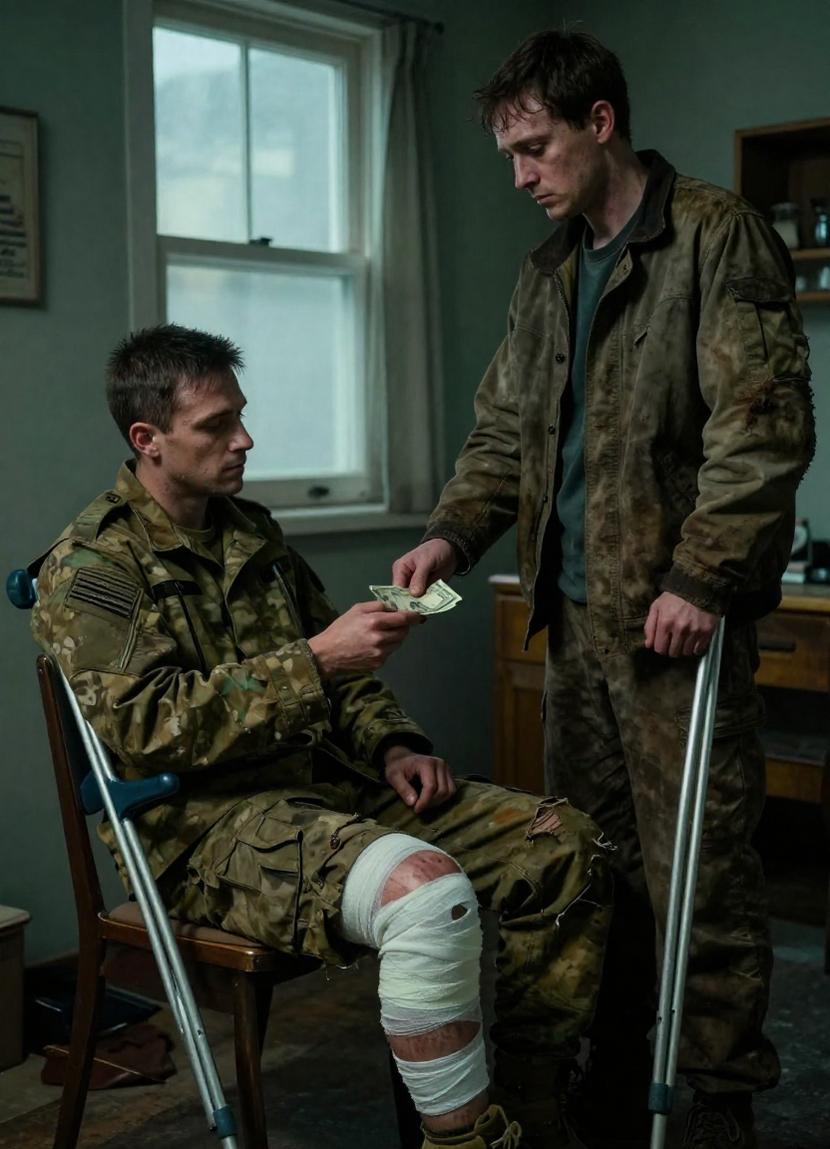
Then came a knock. My brother appeared—grease-stained jacket, dark circles marking his tired eyes. He worked endless hours at Steelworks Garage for minimum wage; his hands bore stories of toil.
Seeing my injury, he cursed under his breath. “They didn’t help you?” Not a question.
I shook my head.
Without hesitation, he pulled from his pocket a bundle of crumpled bills—tens, twenties—pressing them into my palm. “Eight hundred. I sold all my tools.”
“You need those,” I protested.
“I need you walking. I’ll figure out the rest.”
My parents had assets stacked, savings stashed, and a boat named after a holiday spot they barely remembered. My brother had little—and he gave me everything.
I took the money. Not enough, nowhere near, but it was proof. Proof someone refused to let me bleed alone.
He left, squeezing my shoulder. “You’ll be okay. You always are.”
He had no idea what was coming.
That night, sleep eluded me—not from pain’s grip, but memories storming relentless. Growing up, identities were assigned. My sister was the ‘Investment’—the favored one, supported no matter the cost. I was the “Reliable One”—the silent worker, expected to endure and figure it out alone.
When my sister’s first business failed, a $15,000 loss, Dad wrote a check without hesitation. When the second venture floundered, they refinanced the house.
I remembered the night of my broken transmission, asking for just a $2,000 loan. Conditions, contracts, paperwork—all formalities to build character in their eyes.
I paid back every cent—early. Yet respect remained elusive. Instead, it set the bar for how much suffering I was expected to swallow quietly.
Now, with leg elevated on mismatched pillows, it all made cold sense. This was never about money. They had it. Just not for me.
The next morning, I called the military hospital again—no change. Approval still pending. Weeks too long.
I stared at my phone, then at the scrolling contacts—payday lenders, high-interest loans—the predatory smiles lurking behind promises.
I went anyway.
The office smelled of stale coffee and desperation. The man’s voice was smooth, rehearsed, as he outlined how much of my future I was auctioning for another day’s hope. The interest rate was brutal, the repayment merciless.
“Do you understand the terms?” he asked.
“Yes.”
I signed.
Two days later, surgery awaited. On the cold gurney, eyes tracing cracked ceiling tiles, I counted backward as a nurse steadied my IV. My last thought before darkness claimed me was Dad’s voice: “We just bought a boat.”
I woke to layers of bandages and metal encasing my leg, a sharp, precise pain declaring something finally fixed.
The surgeon’s words later confirmed relief. “We got it in time. Full recovery is possible if you commit to rehab.”
But relief was fleeting. The first loan payment loomed three days away. Bank account: forty-seven dollars and some change. Payday weeks away.
I juggled numbers like a fool, desperation rewriting every equation—the possibility of selling plasma, furniture, things I never imagined.
Then fate whispered through a small, forgotten lottery ticket in my jacket pocket. Water, crackers, a frivolous gamble.
I scanned the numbers twice. No triumph, no fireworks—just enough. Enough to breathe. To hope. To stop drowning.
Silently, I called a lawyer—a sharp, no-nonsense professional in a glass tower downtown.
On crutches, looking every part the broken soldier, I told him what I needed: protection. For my assets and knowledge. To understand my parents’ finances better than they did.
He studied me, then warned, “That second part… changes everything.”
“I know.”
Days later, he handed me a thick dossier—the reality my parents hid behind polished smiles.
The house, their ‘nest egg,’ was a sinking ship—overleveraged, behind on payments, foreclosure notices buried unread. The boat? Barely paid beyond a high-interest credit card down payment, loans built on promises of income that never existed. My sister’s business? Draining every remaining asset.
“They’re not wealthy,” he said quietly. “They’re pretending.”
The cruel truth hit deep. Denied five thousand to save my leg while tens of thousands vanished to uphold illusions.
“Can you shield me from their collapse?” I asked.
“No,” I said. “I won’t run. I’ll own it.”
That moment birthed a plan.
A company was forged—anonymous, disconnected. Through it, I approached banks holding their debt. Banks crave clean books. They sold it to me cheap—a daughter no longer dismissed, but the owner of their debts, their home, their fragile empire.
They had no clue. That was the hardest part.
I didn’t appear as their daughter. Instead, I came as Chance.
The intermediary’s polished British accent framed the deal in language my parents trusted. A sale-and-leaseback scheme: stay in the house, maintain appearances, access credit. Immediate relief without public fall.
Dad basked. Mom questioned style, not substance. Sister dreamed of expansion.
The contract was dense, fifty pages filled with fine print. Hidden was the blade: missed payment meant instant termination, immediate possession, no delays.
They didn’t read it. They never do.
Signing it, I felt not triumph, but an icy finality settle deep in my chest.
That night, I stood without crutches for the first time. Leg steady, steps careful. No limp. A smile, not born of victory, but of standing finally on my own.
Outwardly, everything stayed the same. They spoke of “restructuring,” naming it savvy or strategic. Sister posted curated photos speaking of alignment and abundance.
Lightness in their eyes, oblivious that they were now tenants.
I rebuilt too—not just my leg, but my life. Physical therapy smelled of disinfectant and resilience. My therapist’s quiet voice reminded me, “You don’t need to prove anything here. Your body isn’t your enemy.”
I wanted to believe.
Financially, knowledge was power. I knew the margins, the deadlines, the fragility beneath their poise. Confidence in fragility sounds like quiet glass under pressure.
Weeks later, Dad phoned—a rehearsed check-in.
“Hey… just checking in. Been busy.”
I kept my voice neutral, “Recovering.”
He lingered for praise that never came, then ended the call.
People like Dad need witnesses. When their reflections fade, they stumble.
The intermediary sent monthly updates—polite reminders, bold Late Fee notices, clauses they skimmed and dismissed.
Thanksgiving arrived—the family’s theater.
Sister arrived early, dazzling in new wealth, drunk on investors and future plans. Wine flowed while debts tightened unnoticed.
Dad carved turkey ceremoniously, eyes briefly meeting mine across the table.
“You’re walking better,” he observed, pride steeped in denial.
“Yes,” I answered. Recovery was inevitable.
Toasts rang out, celebrating partners who saw value, unlike banks focused on numbers.
I sipped water silently, standing in the house I owned, the money I controlled.
Then, the inevitable happened.
A missed payment on time triggered termination.
Emails unread, attempts to pay late, all meaningless.
By morning, the lease was gone.
I scheduled the meeting.
My parents arrived late, annoyed, demanding coffee, expecting junior staff.
I sat, facing them as the owner.
Shock froze their faces. Sister’s forced smile dropped. Mom’s color drained. Dad’s mouth opened, searching for words to undo reality.
“I’m handling this,” I said simply.
Dad’s fury surged, “This is a joke.”
“No,” I replied. “It’s a contract.”
I laid out every detail—debt purchase, default, unforgiving clauses.
Mom’s tears were raw, no performances now. “You tricked us,” she whispered.
“You signed,” I said.
Security closed in as Dad’s fury spilled beyond control, threats and boasts mingling.
I listened, then placed a document before them.
“I reported that weeks ago.”
Silence enveloped us.
Outside, crisp air filled my lungs as I called my brother:
“Pack up. I bought Steelworks Garage.”
Silence, then disbelief, then laughter through tears.
I ended the call, feeling something unfamiliar but steady—resolution, not revenge.
Collapse wasn’t violent; it was silent, drawn out.
Locks changed, notices taped, finality delivered with cold professionalism.
Mom called first. I let voicemail take her fractured apologies, her half-finished pleas filled with family and forgiveness—without ever saying sorry.
Dad’s call followed—rage, threats, arrogance. “You think you’re clever? There’s money you’ll never touch—offshore, protected.”
I closed my eyes, breathing deep. “I know,” I answered. “That’s why I reported it.”
Silence. The line died.
Sister tried to breach my silence—makeup perfect, voice dripping sympathy.
“You didn’t have to do this. We could have worked something out.”
I laughed softly. “Extreme? Like refusing five thousand dollars for surgery?”
“Not fair.”
“No. Never was.”
She left, heels clicking, phone already dialing damage control.
I went for a night walk—no crutches, steady legs beneath me—each step a quiet triumph.
I thought of the girl who signed that loan with trembling hands, swallowed disappointment, called it maturity.
Of my brother, who found his name on Steelworks Garage’s door as owner, never needing to sell his tools again.
Family, I’d learned, isn’t who raises you.
It’s who refuses to let you bleed alone.
News spread in whispers. Friends cautious, neighbors guessing.
Parents lost control; their curated life crumbled.
I felt not victory, but calm justice—not destruction wrought by me, but by their own arrogance and denial.
One afternoon, after therapy, my therapist told me, “You walk like someone who believes in herself again.”
I smiled, “I do.”
The house stayed eerily quiet. No screams, no courtroom drama—just absence.
Parents vanished from routines; the Ivy Room membership canceled, the havenport slip reassigned.
Friends stopped calling, unsure who to believe.
Silence spoke volumes.
My recovery was more than physical. Returning to duty, earning trust silently, my commanding officer’s nod was all I needed.
One evening, brother and I closed Steelworks together.
The smell of oil and fresh paint, walls repainted, tools replaced.
“They came by,” he said casually.
“Who?”
“Mom and Dad. Didn’t come inside. Just stood across the street.”
I pictured them—Dad stiff and proud, Mom’s hands clenched tight, faces of defeat they’d never admit.
“What did they want?”
He shrugged, “Didn’t ask.”
We locked up, biting into the crisp dusk air.
“I told them this place isn’t theirs anymore. Told them to leave.”
“You didn’t have to say that.”
“Yes. I did.”
A week later, my lawyer’s text: ‘Charges progressing. Timelines set.’
Mom sent a handwritten letter, pages inked with grief and justification—a plea for forgiveness wrapped in the weight of mistakes.
I read it twice, folding it slowly.
I understood perfectly. They chose comfort over compassion, image over truth, a boat over their daughter’s chance to walk.
Understanding required no reconciliation.
That night, on my balcony, I stretched my leg, feeling its steady strength beneath me.
The girl who once believed love was earned by silence was gone.
In her place was something steadier; something called self-respect.
The final meeting unfolded on a quiet Tuesday.
Parents arrived separately, burdened by choices.
Dad avoided my gaze; Mom met mine, then looked away.
The attorney reviewed terms, outcomes, consequences—no drama left to mine.
Dad’s voice broke: “You didn’t have to ruin us.”
I met his eyes calmly, “I didn’t ruin you. I stopped saving you.”
He flinched as if struck.
Outside, autumn leaves crunched beneath my sure steps.
I thought of bleeding through gauze, the call, the eight hundred dollars in my brother’s hands, and knew I’d gone exactly far enough.


