
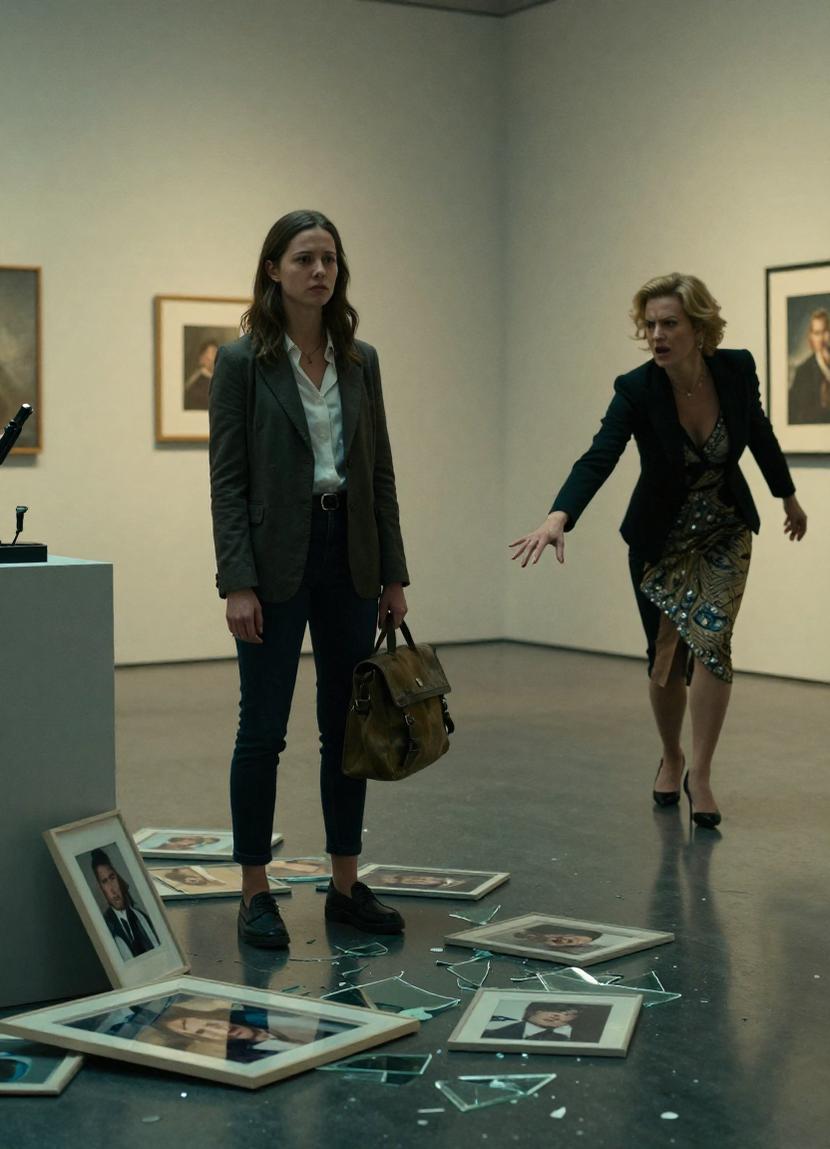
The shattering crash of glass ricocheted through the quiet gallery as my mother’s furious arm swept across the display table, sending my meticulously framed photographs crashing and skidding across the polished floor. Shocked guests bolted for the exits, their whispers drowned by the harsh pounding of my mother’s ragged breaths and the cold, unyielding stare from my father. “Ungrateful brat!” she spat, her manicured hands trembling with a raw fury that seemed impossible to contain. “All we want is for you to do what’s right! Michael needs that Silverwood Lake property far more than you!”
I’m Isabella. I’m 32 years old. And this night was supposed to mark a triumph—the unveiling of my first solo photography exhibition, a year’s labor dedicated to capturing the soul of my grandfather’s cherished Silverwood Lake house across seasons and moods. Instead, it spiraled into yet another ruthless family conflict over Michael’s endless demands and entitlement.
‘The Silverwood Lake house isn’t yours to give,’ I said softly, my gaze locking with my father’s now flushed face. ‘Grandfather entrusted it to me for a reason.’
‘Michael has a family!’ my father barked, stepping carefully through the jagged glass toward me. ‘Three kids who need room to grow! You just want it for your silly pictures!’
Those ‘silly pictures’ had already earned me thousands. But to them, those dollars were invisible, just like their neglect. Michael was their golden boy—the businessman with the perfect family and perfect facade. I was the stubborn artist, the disappointment who refused their mold.
‘Sign the papers,’ my mother demanded, pulling a crisp folder from her designer purse. ‘Everything’s ready. Just sign, and we can end this embarrassment.’
My eyes flicked to the battered messenger bag slung over my shoulder—the other folder I carried contained the environmental assessment commissioned months ago. The one that would change everything about their expectations.
‘No,’ I stated with quiet conviction, watching their stunned faces. ‘The Silverwood Lake property stays with me. It’s exactly what Grandfather wanted.’
Mom’s hand slammed down, toppling another display stand; glass shattered again, scattering precious moments onto the cold floor. Every photo was painstaking—captured in perfect light, weather, and emotion—a year of dedication crushed in seconds.
‘Your grandfather never imagined what Michael would become,’ my father growled. ‘He has an empire now! He could develop that land, make it profitable instead of leaving it empty!’
Empty. They called Silverwood Lake empty because they never bothered to visit, never saw the wildlife sanctuary thriving on the north shore, never noticed the summer artist retreats I organized. Nor did they realize Michael’s empire thrived on shortcuts and quick cash, ignoring true value.
‘Michael hasn’t set foot there since Grandfather passed,’ I said gently, avoiding shards of glass while salvaging what I could. ‘He only cares because he saw dollar signs—condos, nothing more.’
‘Development means progress!’ Mom snapped. ‘When will you grow up and find real purpose, instead of these artistic whims?’
I almost smiled at the irony. They hadn’t a clue about the endangered species nesting in the wetlands, nor the environmental protection order awaiting approval tomorrow.
‘I am doing something meaningful,’ I said firmly, lifting a fragile photo of a loon family at dawn. ‘Just not the kind of meaning you understand.’
‘Enough!’ my father slammed his palm against the wall, rattling the remaining photographs. ‘Sign those papers or you’re cut off. No family, no support, nothing!’
I stood tall, looking at the faces of two people who’d spent years trying to break me into their shape, who cheered only for Michael while belittling my achievements, now destroying my work to control me.
‘That’s your choice,’ I said softly, hoisting my bag. ‘But my answer remains no.’ Pausing at the doorway, I added, ‘I have a meeting with the State Environmental Protection Board tomorrow morning. Rest is key.’
Their expressions flickered from fury to hesitation.
‘Environmental Protection Board?’ my mother whispered, her voice uncertain for once. ‘What do you mean?’
I stepped through the chaos toward the cool night air, unfazed. ‘You’ll find out soon enough. Tell Michael—he should be there.’
Her shrill cry followed: ‘Isabella, come back!’
But I kept walking, holding tightly to years of being underestimated, my passion dismissed, my dedication questioned. Tomorrow, they’d learn what I’d been cultivating in that supposed ’empty’ Silverwood Lake property. Tomorrow, they’d understand why Grandfather entrusted me with his legacy—and I had the proof in every picture.
—
Part 1: The Verdict
The Environmental Protection Board meeting room buzzed with anticipatory tension when I arrived at dawn. Michael sat in an expensive tailored suit, hunched over blueprints with his development team—soon to be rendered useless. My parents lingered nearby, their frost-cold stares locked on me.
I took my seat quietly, unpacking the restored laptop and the crucial folder of evidence. After the gallery disaster, I’d worked through the night retrieving every photo from backup. Tonight wasn’t for a show—it was for justice.
‘This is ridiculous,’ I overheard Michael mutter. ‘Birds and plants can’t stop progress. Investors are waiting.’
Board members entered, led by Elena Ramirez, a stern but fair director whom I’d worked with closely. She had devoted particular attention to my documentation of the wetland ecosystems.
‘Good morning,’ Elena began. ‘We are here to discuss the environmental assessment of the Silverwood Lake property and the implications for development.’
I stood, connecting my laptop to the projector. The first image filled the screen–a pair of endangered sandhill cranes nesting in the marsh.
‘This property harbors critical habitat for multiple protected species,’ I explained steadily. ‘I’ve spent a year meticulously documenting their presence, behaviors, and environments.’
Each photo unfurled rare orchids blooming amid wetlands, threatened fish in pristine waters, and otters frolicking along the shore—each tagged with GPS data and detailed observations.
‘This is absurd!’ my father protested, rising. ‘These photos could be staged! Isabella constructs fantasies!’
Elena raised an eyebrow. ‘Mr. Harrison, our scientists have verified every detail. Your daughter has provided exemplary, verified documentation of a thriving ecosystem.’
I continued, revealing how Silverwood Lake served as a vital wildlife corridor connecting two protected reserves. Michael’s development plans would decimate this fragile balance.
‘Furthermore,’ I said, pulling Grandfather’s original property documents from the folder, ‘the land was specifically protected by his will.’ I laid his notes detailing its ecological importance on the table.
Michael exploded, ‘There were no legal conditions! Only the property left to her!’
A calm smile touched my lips. ‘Actually, there were. Grandfather knew precisely what he was safeguarding. That’s why he trusted me—because I understood its true worth.’
My mother’s complexion paled as the room shifted beneath their ambitions.
‘Based on this evidence,’ Elena declared, ‘and pursuant to state environmental laws, we designate the Silverwood Lake property as a protected wildlife sanctuary. No development will be permitted.’
Chaos erupted. Michael’s team frantically shuffled papers. My father demanded to speak with higher powers. Mom sat frozen, her gaze heavy with disbelief.
‘You orchestrated this?’ Michael accused, storming toward me. ‘You destroyed everything! Do you realize the money lost?’
I met his glare evenly. ‘You should have visited these past five years, Michael. Maybe then you’d have seen the truth yourself.’
‘This isn’t the end!’ my father threatened. ‘We’ll appeal. Conduct another assessment!’
‘You can try,’ I replied as I gathered my materials. ‘But every survey will find the same. This isn’t simply land for development—it’s a sanctuary, exactly as Grandfather intended.’
Elena stepped forward, handing me additional paperwork. ‘Isabella, we’d like to discuss establishing a permanent research station here. Your work has been invaluable.’
A slight flinch from my mother betrayed her surprise at the respect my photography now commanded—years after dismissing it as mere hobbyism.
‘Of course,’ I agreed, ‘I’d be honored to help identify observation posts.’
Exiting the meeting with Elena, I heard Michael’s bitter voice trail after me, ‘This is your fault! You’ve spoiled her rotten…’
I smiled to myself. They still didn’t understand: this wasn’t revenge. It was honoring something sacred—something irreplaceable—just as Grandfather taught me. The Silverwood Lake house would remain the haven it was meant to be, a refuge for wildlife and beauty. And my photography? It had become profoundly meaningful after all.
—
UPDATE: Six Months Later
Six months after the court ruling, I stood on the deck overlooking Silverwood Lake, the morning mist curling like ghostly ribbons over the water. My camera clicked softly, freezing a pair of sandhill cranes as they tenderly taught their chicks to forage. The transformation into a fully sanctioned wildlife sanctuary exceeded even my boldest hopes.
Universities now sent eager graduate students, eager to research the sanctuary’s wonders. My photography had sparked national buzz, with National Geographic expressing interest to highlight this preservation triumph.
‘Isabella!’ a young researcher called, ‘that rare orchid you photographed is thriving and spreading!’
I smiled, recalling how my parents once dismissed this land as barren and wasted. Now it thrummed with vitality, with purpose and scientific significance.
My phone buzzed with a message from Laura: ‘The kids miss the lake. Could they visit this weekend? Just us—no Michael.’
Our family had shifted. Michael hadn’t spoken to me since his plans collapsed, but Laura had reached out—always cherishing the lakehouse’s untouched beauty. Her children shared my love for wildlife.
‘Of course,’ I replied. ‘The baby otters are exploring now. Tell them to bring cameras.’
My parents took longer to accept the change. Last month, Mom appeared unexpectedly, her sleek Mercedes oddly out of place amid rugged research vehicles.
‘I don’t get this,’ she confessed, watching me photograph a rare butterfly. ‘You could have made millions developing the land.’
‘Look at this,’ I said, showing her the delicate butterfly through my lens. ‘This species exists only in a few places worldwide. How much is that worth to you?’
She was quiet, truly seeing for the first time. ‘It’s beautiful,’ she admitted quietly. ‘Grandfather used to speak like this.’
‘I know,’ I whispered. ‘That’s why he trusted me to protect it.’
This morning, as I reviewed my shots, Dad’s BMW rolled up beside my cabin. He stepped out, dressed down but tentative.
‘Isabella,’ he began hesitantly, ‘Mom mentioned you’re presenting something today.’
I nodded, surprised he knew. ‘It’s the sanctuary’s first educational program for local schools—teaching kids about conservation and wildlife photography.’
He glanced at the cameras and research gear. ‘Michael’s youngest, Ethan, talks nonstop about the photos you taught him to take. Says he wants to be a wildlife photographer.’
‘He has a good eye,’ I smiled, recalling Ethan’s excitement capturing his first great blue heron. ‘Want to see what we’re working on?’
He hesitated before nodding. I led him to our research station, walls adorned with my photographs paired with scientific data and conservation insights.
‘You did all this?’ he breathed, absorbing images tracing a rare frog’s life cycle.
‘This is what I’ve done while you thought I was wasting time,’ I said softly. ‘This is what Grandfather envisioned.’
Dad stood silently, absorbing each piece. Finally, he looked up. ‘I was wrong—about this place, about your work. Your grandfather would be proud.’
Those words fell like gentle mist over the lake.
‘Would you like to stay for the presentation?’ I offered. ‘The kids would love to see their grandfather’s legacy.’
He nodded, and for the first time in years, a genuine smile softened his face.
That afternoon, I watched Dad help Ethan adjust his camera to capture a shy family of deer at the forest edge. The lakehouse hadn’t just preserved wildlife; it was healing us.
Michael still refused to visit, too proud to admit defeat. But his children came often, learning to see through a lens of wonder instead of profit. Mom was cultivating a native butterfly garden, though she’d never admit how much she cherished it. Dad was learning success transcended dollars.
As the sun dipped, painting the sky with colors no building could match, I took one last photograph—my father and grandchildren crouched quietly, cameras poised, immersed in the living magic of Silverwood Lake. The future was not what anyone planned—but it was infinitely better.
Grandfather’s Silverwood Lake house had become what he intended: a sanctuary for nature, a refuge for hope, a place where we learned to see the world anew.
Sometimes, the most precious things in life aren’t bought or built. They’re preserved, protected, and shared—waiting for those willing to truly open their eyes and hearts.


