
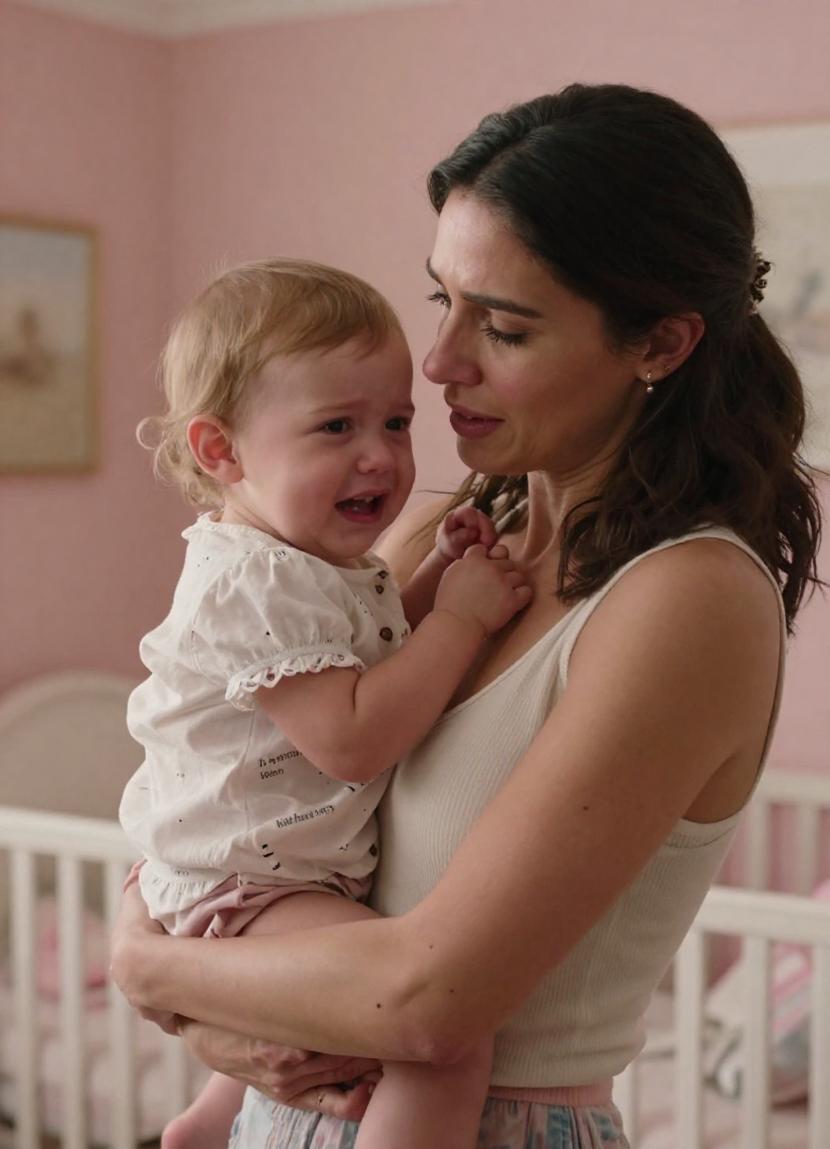
Within the vast, echoing halls of the Hartman estate, a heavy truth hung unspoken. No one dared voice it aloud, but every heart inside felt its weight: little Sofia Hartman was slipping away. She was barely three months old—too young to know pain, too fragile to fight it.
The doctors’ verdict had been merciless, robotic. Three months. Maybe less. Their words echoed like a death sentence, cold and final.
And Victor Hartman stood there, the billionaire patriarch used to bending the world to his will through wealth and influence, only now powerless, looking at his daughter with helpless eyes. Money bowed to no one—except to fate.
The estate was nothing short of a palace—immaculate, vast, yet oppressively silent. Not the silence that brings peace, but the one weighted with guilt, the kind that creeps into every corner, settling on chairs, lingering on pillows, permeating the air with despair.
Victor spared no expense: the finest private doctors, cutting-edge equipment, a rotating cadre of nurses, therapy animals, calming music, imported toys, cozy blankets, walls painted in Sofia’s once-favorite pastel shades. Perfectly arranged, perfectly sterile.
Yet the one thing that mattered remained just out of reach.
Sofia’s eyes held no light—distant, vacant, as though she dwelled behind an invisible glass. Since the loss of his wife, Victor was a shadow of the titan once lauded on every business magazine cover. Meetings were abandoned, calls unanswered, the empire left to run without him. His world was focused on just one fragile horizon: his daughter’s fading breath.
Clara Donovan’s days began before dawn. A silent guardian in the shadow of despair, her routine was meticulous: breakfast untouched by Sofia’s lips, medication administered with careful precision, every slight movement, every shallow breath keenly logged. Time was the enemy, and she was trying desperately to freeze it.
Sofia rarely spoke, her nods or shakes scarce and hesitant. Most of the time she just sat by the window, gazing blankly at the shifting light, as if the warmth belonged to everyone except her.
Victor spoke steadily to her—stories of distant vacations, imagined fairy tales, promises whispered into the cold room—each word an unspoken plea bridging a chasm growing wider every day.
Then Clara arrived.
Gone was the typical polished enthusiasm of a newcomer in the estates of the rich. Her calm was different—quiet, deep, the kind worn only by someone who has grieved to the core. Months before, Clara had lost her own newborn baby. Her life had contracted into empty rooms, imagined lullabies, and a crib rocking only in dreams.
Searching for work, her eyes caught an ad: a sprawling house, light chores, caring for a fragile child. No medical experience required—only patience. Fate, or desperation, drove her to answer.
Victor met Clara with weary formality, laying down rules of distance, respect, and discretion. She accepted silently, moving into a modest guest room in the estate’s furthest wing, carrying only a small suitcase, as if reluctant to claim space in a grieving home.
Her first days were a careful study in silence and observation. She tidied, organized, replenished supplies, refreshed curtains and flowers, folded blankets with gentle hands. She never hurried toward Sofia but watched quietly, sensing an abyss of loneliness no mere kindness could heal.
What stunned Clara wasn’t Sofia’s pale skin or the fragile wisps of hair returning, but the hollow inside—a presence ghostlike and unreachable. It mirrored her own emptiness after loss.
So Clara chose a different path: patience.
No forced conversations. A tiny music box by Sofia’s bed, its melody soft as a whisper. Sometimes Sofia turned her head—just a flicker of recognition—but it was enough.
Clara read aloud down the hall, her voice steady, unnoticed but unwavering.
Victor noticed. Clara filled the house not with noise, but with warmth—a fragile light in the cold shadows.
One night, Victor witnessed a tender miracle: Sofia holding the music box, grasping it with a hesitant hope. Without words, Victor called Clara into his study and simply said, “Thank you.”
Days glided by as trust wove its fragile threads. Sofia let Clara brush her fine new hair. Then, in a moment poised on a knife’s edge, Sofia shivered, gripped the hem of Clara’s blouse, and whispered, barely audible, “It hurts… don’t touch me, Mommy.”
Clara froze—not at the pain, but the word. ‘Mommy.’ Sofia barely spoke, and when she did, it was a memory, a fragile imprint of a past filled with fear.
Slowly, Clara set down the brush, voice low and steady, “Okay, we’ll stop for now.”
That night, sleep fled Clara’s eyes. Victor had told her Sofia’s mother had died—so why did that name carry so much weight? Why did the child flinch as though bracing for screams?
Clara watched and learned. Sofia startled at shadows, tensed with loud voices, and grew worse after certain medications.
A creeping suspicion drove her to explore an old storage room. Behind a forgotten cabinet lay dusty boxes, faded labels, and bottles marked with warnings and expiration dates stretching years back. Each labeled for Sofia Hartman.
She photographed everything and dove into research, breath catching with horror.
Experimental drugs, dangerous doses, substances banned elsewhere—this was no careful care.
It was a map of risk.
Clara imagined Sofia’s small body battered by pharmaceuticals meant for other, harsher diseases. Fear swelled, but beneath it rose fierce protective rage.
She kept silent—didn’t want to shatter Victor’s fragile world just yet. She’d seen him by Sofia’s bedside, his life hanging in those moments.
But Sofia was in danger—and had come to trust her.
Clara began documenting medication timings, dosages, and Sofia’s reactions. She observed the nurses, cross-checked bottles.
And the truth—a twisted overlap of forbidden treatments—emerged.
That same day, Victor entered Sofia’s room unannounced and found her cradled against Clara, serene for the first time in months. Shocked, voice sharp, he demanded, “What are you doing, Clara?”
Quick to defend, Clara explained gently—but Victor, his fear turning to confusion and betrayal, retreated.
Panic gripped Sofia. She clung to Clara, crying out with desperation, “Mommy… don’t let him scream.”
The silence afterward wasn’t cold—it was breaking.
Victor stood frozen, the unbearable truth sinking in: Sofia wasn’t merely ill. She was terrified.
Not once did she reach for him first.
That night, Victor locked himself away, pouring over Sofia’s medical charts like a man unmasking a nightmare. Drug names, dosages, instructions—all pointing away from hope and toward harm.
At dawn, he ordered the immediate halt of several medications. When questioned, he was silent. Clara was given no reason, but noticed a flicker of something long unseen.
Sofia stirred—eyes more alert, appetite slightly stronger, faint smiles brimming with fragile promise.
Clara could no longer shoulder the secret alone.
She hidden a bottle and on her day off, sought out Dr. Megan Sullivan at Beacon Medical Center, a trusted friend.
Megan listened without judgment, promptly sending the medication for lab analysis.
Two days later, the call came: “Clara, you were right. This isn’t meant for children. The dosage—it’s far beyond safe.”
The report detailed extreme fatigue, organ stress, and immune suppression. Not therapy. Poison.
A single name haunted every prescription:
Dr. Nathaniel Cross.
Clara laid the report bare before Victor, her voice calm but resolute. “I trusted him,” Victor whispered, face drained of all color. “He promised to save her.”
What followed was silent fury—a grim resolve rather than heated argument.
Together, they unearthed shards of truth: past cases hidden, families silenced, other children lost. Their shared vow was clear: they could no longer be prisoners of silence.
They took their findings to The Justice Hall.
The investigation exploded. Media storms, headlines accusing Victor of neglect and Clara of deception. Threats lurked in shadows. Yet, despite the chaos, Clara stood firm.
“If they fear us,” Victor said one strained night, “it’s because we have found the truth.”
Within the mansion, a miracle took root.
Slowly, Sofia returned—not in an instant, not magically, but step by careful step.
She wanted to see the garden, giggled softly at Victor’s offering of favorite snacks, filled her drawings at Rosewood Elementary with color and warmth—trees blossoming, hands joining, windows opening wide.
At The Justice Hall, families lined the benches, faces marked with quiet exhaustion from their own battles. Clara testified with quiet strength, Victor admitted his failings, owning his blindness with raw humility.
On day three, Sofia’s drawing was presented—an image of a bald girl holding hands with two figures, beneath it, shaky words: “Now I feel safe.”
The room fell utterly silent.
Because suddenly, it wasn’t about paperwork.
It was about life.
The verdict was swift and clear: guilty on all counts. No cheers, only a collective breath released. Dr. Cross was convicted. New regulations were enacted to curb experimental treatments on children.
The estate began to breathe again—not as a mausoleum, but a home filled with music, footsteps, laughter, and the scratch of colored pencils on paper.
Sofia thrived, shy at first, then proud. Friendships blossomed at Rosewood Elementary. Her art spoke volumes, telling stories no words could hold.
One day, at a school assembly, Sofia stepped confidently onto the stage holding an envelope. Clara watched, unaware, as Sofia read aloud:
“Clara has always been more than my caregiver. She is my mother in every way that matters.”
The adoption was announced.
Clara wept quietly; Sofia ran into her arms. Applause surged like a wave. Victor, unmoved by pride, let tears fall freely—at last, truly present.
Years passed. Sofia carried her scars, but burned fiercely with an inner light no darkness could extinguish. Victor transformed into a devoted father. Clara was no longer just an employee.
They were family.
One afternoon at Tranquil Art Hall, Sofia unveiled her first solo exhibition—paintings of hospital beds turned into warm spaces, windows opening onto blue skies, hands clasped in strength, shadows dissolving into color.
Speaking to the crowd, Sofia’s voice rang clear:
“People think my strength came from medicine. But the real strength was Clara’s love. She stayed when I couldn’t ask. She loved me when I was hardest to love.”
The audience rose in a standing ovation. Clara grasped Sofia’s hand. Victor smiled—serene and proud, a man finally understanding that true wealth lies not in fortunes, but in those we choose to protect.
That night, returning to the Hartman estate, the mansion felt transformed—not vast, not perfect, but alive.
Clara understood a profound truth deeply settled in her soul: life doesn’t always restore what we lose in the same form, but sometimes it grants us a second chance to love, to shelter, to break silences that wound the soul.
And it had all begun with a whispered word in a silent room—a word that was destined to bury a terrible secret forever.


