
Chapter: The Space Between Them
The weeks that unfurled after Elena’s passing were anything but magical. There were no sweeping, cinematic changes—no sudden bursts of joy or relief. Instead, there was the quiet, measured cadence of Mateo’s breaths each night as Sofia sat close by his crib, her presence a gentle tether in the vast emptiness left behind.
Esteban found himself lingering longer in that dim nursery. At first, he stood stiffly against the wall, watching silently, trying to decode a language of grief and healing he didn’t yet understand—like a negotiator studying his counterpart’s every move, searching for signs of progress.
But Sofia? She did nothing extraordinary. She folded soft blankets with methodical care, wiped the dust from nursery shelves, and hummed melodies his mother used to sing—fragile threads connecting past to present.
Mateo no longer demanded being held the moment he stirred. Instead, he played quietly on the rug, his small fingers reaching for blocks, his eyes flickering back to Sofia, seeking reassurance she remained near.
One evening, when the stillness hung heavy, Esteban broke the silence. ‘You don’t try to make him laugh,’ he said, voice low, curious.
Without turning, Sofia’s reply was a whisper, steady and sure. ‘Children don’t need to be entertained. They need to feel safe.’
That simple truth clung to him long after she left, echoing in the hollow spaces of his grief.
—
Chapter: The First Crack in the Armor
Esteban was a man who bent worlds with his will—boardrooms bowed, markets shifted, risks were tamed with calculated moves. But grief? Grief defied every strategy, slipping through his fingers like smoke.
One night, as Mateo nestled asleep in Sofia’s gentle arms, Esteban sat facing her, the weight of unspoken fears between them.
‘Aren’t you afraid?’ he asked finally.
‘Afraid of what?’
‘Of being here. Of being close to my family. The whispers, the judgment.’
Sofia offered a weary smile, worn by battles unseen. ‘I work here to buy medicine for my mother. People always talk. No matter what I do.’
Esteban’s gaze sharpened, looking past the quiet facade to see the strength beneath—the absence of makeup, the roughness of hands marked by harsh detergents, the careful balance she held: never too close, never too far.
‘You could ask for more,’ he said, voice softer now. ‘A better position. Higher pay.’
She shook her head, resolute. ‘I’m not here for status.’
Silence fell, but it was different this time. For the first time in ages, Esteban felt the grip of power loosen, replaced by something fragile—shared vulnerability.
—
Chapter: Grief Shared, Not Avoided
One afternoon, curiosity led little Mateo to a drawer where a silk scarf—one of Elena’s cherished possessions—lay folded like a secret waiting to be uncovered. He grasped it tightly, his small frame shaking as tears spilled over.
Esteban’s instinct urged him to pull the scarf away, to shield Mateo from the storm of emotion. But Sofia’s hand caught his arm, firm yet gentle.
‘Don’t,’ she murmured.
Kneeling beside the boy, she breathed softly, ‘You miss your mommy, don’t you?’
Mateo nodded, letting the tears fall freely—not the frenzied screams of a child lost, but the raw, aching grief finally allowed to breathe.
Esteban stood frozen, caught between helplessness and awe. Sofia did not distract or soothe with hollow distractions. She simply was — a patient guardian of sorrow.
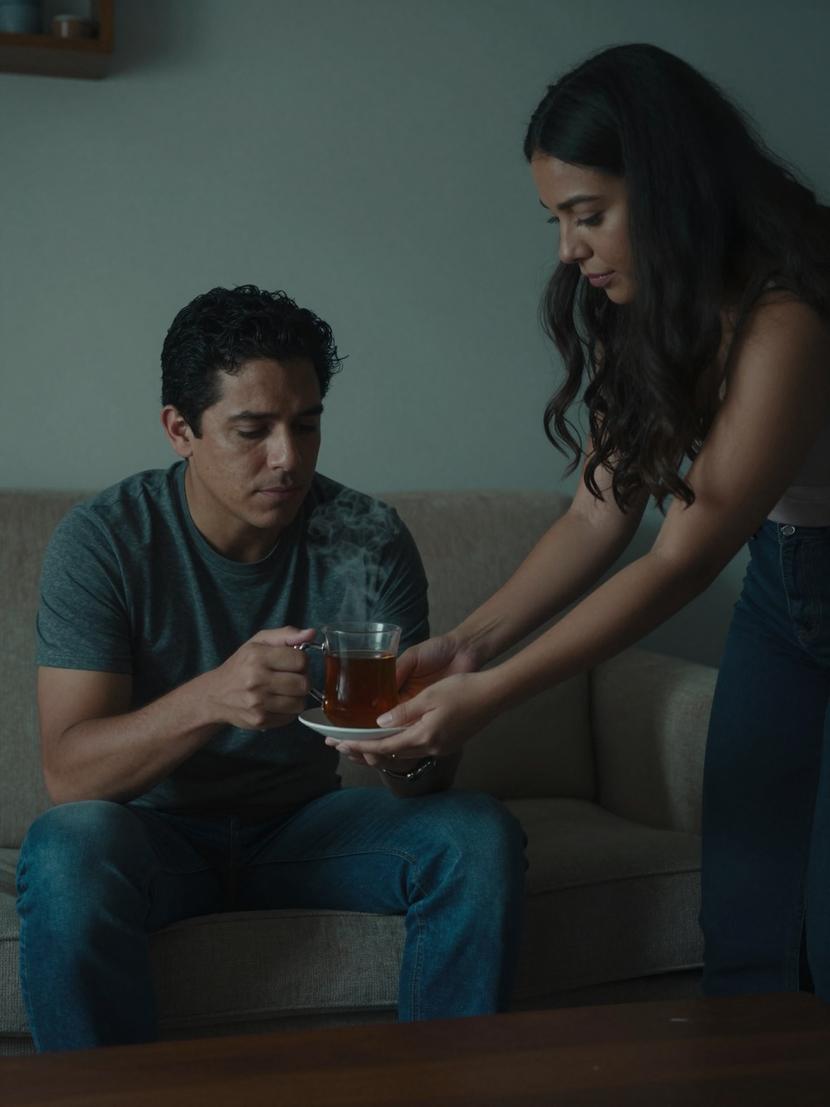
That night, after Mateo’s soft breaths deepened into sleep, Esteban remained, silent in the living room. Sofia entered with two steaming cups of tea, placing one gently in his hands.
‘You don’t have to do that,’ he said, surprised.
‘It’s not for you,’ she replied quietly. ‘It’s for him. If you grow stronger, he’ll feel it.’
A hollow laugh escaped him, tinged with vulnerability. ‘You think I’m weak?’
Sofia met his eyes, steady and sure. ‘I think you’re afraid.’
He said nothing to contest that truth.
—
Chapter: Something That Wasn’t Planned
The seasons turned. Esteban found himself arriving home earlier, hesitating less to lower himself to the floor to sit beside Mateo instead of looming over him like a distant sentinel.
He began telling Mateo stories of Elena—quiet, tender glimpses of a mother’s laughter, small moments stitched with love and memory. Slowly, cautiously, Mateo’s tiny hand reached for his father’s.
Not in leaps, not with fanfare. But in genuine connection.
One evening, as Sofia gathered her belongings to leave, Esteban’s voice stopped her.
‘I don’t know how to thank you,’ he confessed, the weight of gratitude plain in his eyes.
She paused, the tired lines around her eyes softening. ‘Don’t thank me,’ Sofia said firmly. ‘Just don’t push me away because of what people might think.’
He nodded, understanding the silent tension that stretched between them. The barrier wasn’t money or class—it was the world itself.
He stepped closer, careful not to cross invisible lines.
‘I’m not keeping you here because you clean,’ he said cautiously. ‘I’m keeping you because you’re the only person who doesn’t try to control my son.’
Sofia looked up, their gazes locking without retreating for the first time.
No sweeping declarations. No soaring music. Just two weary souls in a quiet room, with the child they both cherished sleeping soundly nearby.
And in that stillness, something delicate blossomed—not love at first sight, but something just as profound: respect, trust, and a warmth that slowly began to thaw the cold silence left by Elena’s absence.


