
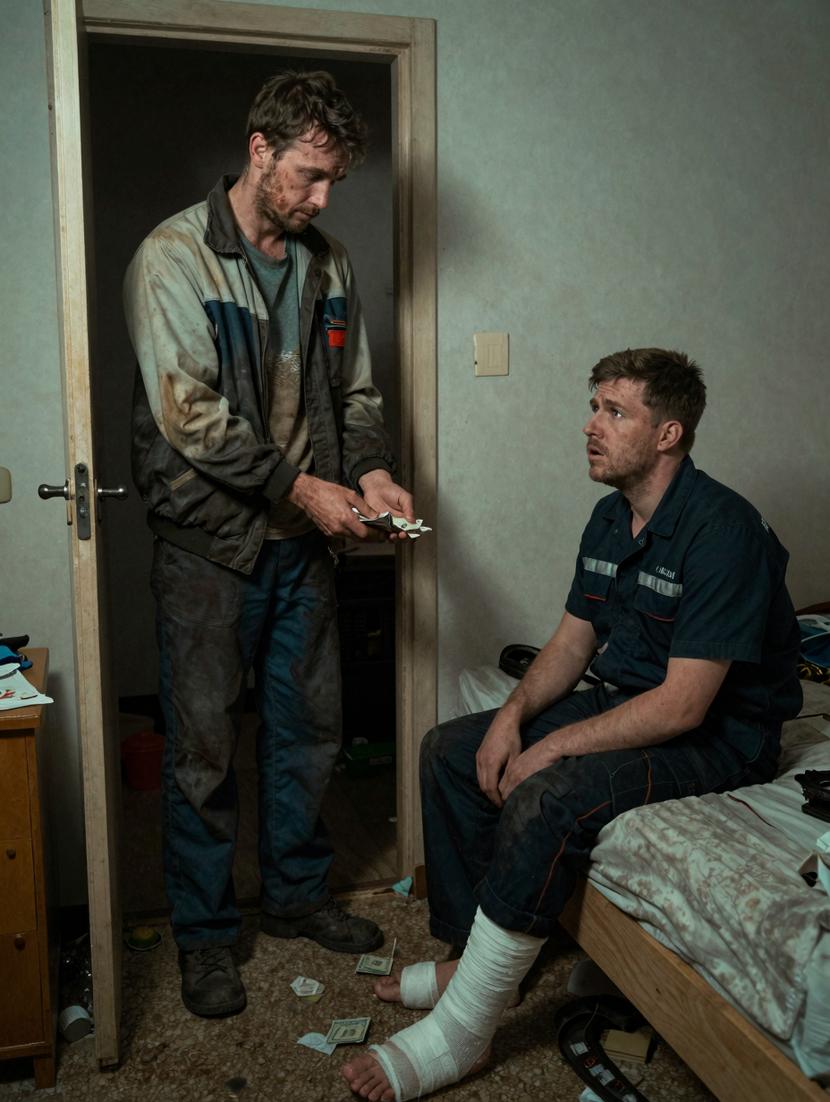
I was still in uniform when the words came crashing down—my leg wasn’t worth five thousand dollars. The doctor had just uttered “disability,” not as a warning, but cold, hard fact. Without surgery within the week, my future mobility was at stake. My phone was pressed to my ear, my boot half-unlaced, my knee ballooned painfully, the fabric of my fatigues stretched taut over swollen flesh.
On the other end, my mother exhaled heavily. My sister’s laugh rang out—bright, eerie in its detachment. And my father’s voice was calm, almost affectionate, yet unyielding. “Sweetheart, we just bought a boat. It’s not the right time for this.”
In that moment, something inside me stilled, like a light flicking off in a dark room.
I was two hours away from home when it happened: a routine exercise, movement under load, steady and controlled. Then the sound—a sickening, wet pop that didn’t belong in a body. The acute heat seared through me as the earth rushed up dangerously fast.
Pain in the military is expected. You learn to decipher discomfort from threat. But this was different. It swallowed my breath whole, leaving a ringing void. When I tried to stand, my leg betrayed me, buckling as if foreign. The medic crouched beside me, his gaze sharp. ‘Don’t move,’ he said, voice low but firm.
In the clinic’s cold glow, I lay on a narrow bed beneath humming fluorescent lights. My uniform was ruthlessly cut at the knee. My leg swelled rapidly, skin shining taut, turning colors too strange for names—purples bleeding into yellows, shadows hiding beneath.
The Physician’s Assistant didn’t mince words. “Severe ligament damage. Possibly worse,” she said, pointing to the ghostly greys of my MRI. “You need surgery. Immediately.”
“How soon?” I asked, my voice oddly calm.
She hesitated. That pause was a verdict. “This week. Delay it, and permanent impairment is likely. Limping. Reduced function. Maybe forever.”
I nodded, as if hearing a weather forecast. It wasn’t the surgery that was the hurdle—it was the approval process. Anyone who’s served knows the endless forms, reviews, and bureaucratic mazes standing between you and your own body. The military’s earliest green light was weeks away. I didn’t have that luxury.
Lowering her voice, the PA offered, “If you can, get it done off-base.”
“How much?”
Five thousand dollars, scrawled on a scrap, slid across the tray. Down payment for a chance to walk free again.
That night, I sat on the edge of my bunk, gauze wrapped tight around my leg, my boot abandoned like a forgotten shell. Barracks buzzed around me—laughs, music, shouted video game taunts. Life, indifferent and loud.
Long minutes passed before I dialed home.
Dad answered on the third ring, cheerful but distracted, metallic sounds humming behind him—old tools or the TV.
“Dad,” I said, voice steadier than I felt. “I’m hurt. Badly.”
I laid it out clinical: the injury, the surgery, the ticking clock, the cost. Promised I’d pay it back. I asked only for help now.
Silence hung, thick.
Then the familiar, weary sigh. “We just bought the boat,” Dad said, kind yet immovable. “Timing’s terrible.”
My breath caught. “It’s my leg. Without this, I might not walk right again.”
“Well,” he answered with unsettling calm, “you’re young. You’ll adapt.”
Mom took the extension—the quick retreat when matters got hard. “Honey,” she softened, “this might be a lesson. You chose this path, the risks. A limp teaches responsibility.” Her tone was faint, like discussing a minor infraction.
My sister’s innocent laughter pierced through. “Relax,” she chimed. “You always manage. You’re the tough one.”
I looked down to the soaked gauze—blood staining white fabric into something raw and real. Permanent. The doctor’s word echoed in my mind.
“I understand,” I whispered.
I did. Without tears, without argument, I hung up. Suspended in the barracks’ noise, something cold and clear settled inside me.
Two days later, I limped into my cramped off-base apartment, crutches my new companions. Each step was a sharp reminder of the stakes. Pills blurred the pain’s edge but not the gnawing fear. Numbers ran loops in my head—credit cards, payday loans, anything to buy me time.
Then came a knock. Opening the door, I found my brother—clad in grease-stained jacket, eyes shadowed by exhaustion from endless mechanic shifts.
He stared at my injured leg, muttering curses. “They didn’t help you?” His tone held no question.
I shook my head.
Without hesitation, he fished a wad of battered bills from his pocket, pressing them into my palm. “Eight hundred. I sold all my tools.”
“You need those,” I said, stunned.
“I need you walking,” he replied simply. “I’ll manage the rest.”
My parents had assets, savings, equity, and a boat christened after a distant vacation. My brother had nothing but gave me everything. The money wasn’t enough—it never would be. But I needed to recall this moment—that someone stood when I bled.
Before leaving, he squeezed my shoulder gently. “You’ll be okay. You always are.” He didn’t know what lay ahead, but I did.
That night, sleep eluded me—not from the pain pulsating in deliberate waves, but from relentless memories I had buried.
In my family, roles were branded early: my sister, the “Investment,” showered with blind faith and resources despite failures; me, the “Reliable One,” expected to bear burdens silently and solve problems alone.
I recalled dinner-table conversations as I silently ate cereal after grueling shifts—watching others receive bailouts while I was left to scrape by.
At twenty-two, when my car gave out, I asked for a loan. They agreed, but under strict terms. Formal contracts. Interest. Not charity, but business in their eyes.
I paid them back early, believing responsibility earned respect. But respect never came. Only an unspoken rule: endure without complaint.
Now, with leg elevated on indifferent pillows, the pattern was clear. This was never about money. They had it. Just not for me.
The next day, I called the military hospital again—still no approval, still weeks away, still time I lacked.
Desperation led me to payday lenders—places dripping with false smiles and venomous contracts.
The office smelled of stale coffee and quiet desperation. The man behind the desk recited terms with rehearsed calm, detailing how much of my future I’d sacrifice for the now. The interest was predatory; repayment merciless. “Do you understand?” he asked.
“Yes,” I answered, signing away hope.
Two days later, surgery was set. On the gurney, ceiling tiles blurred as I counted their cracks, trying to find meaning. The anesthesiologist’s soft voice asking me to count backwards was the last tether to consciousness. Dad’s words echoed: We just bought a boat.
I awoke cloaked in bandages and metal. Sharp, clean pain heralded a new beginning. The surgeon’s word was mercy: “We got it in time. Follow rehab, and you’ll heal fully.” Relief crashed over me like tidal waves.
But recovery demanded price beyond pain. Loan payments loomed, starting soon. Bank balance mocked me—meager funds dwindling fast.
I danced with numbers that refused to align, contemplating plasma sales, pawned goods, desperate acts I refused to name.
Then, tucked in a receipt in my jacket—water, crackers, and a frivolous lottery ticket. I scanned the numbers, disbelief steady in my chest. Not a jackpot, but enough. Enough to breathe. Enough to stop drowning.
I kept the secret and called a lawyer—not flashy—but precise, busy, dependable.
On crutches, I looked broken. He said nothing, only listened.
“I want two things,” I declared, voice steady. “Protection for my own assets. And clarity on my parents’ finances.”
He eyed me sharply. “Understanding their money changes everything.”
“I know,” I nodded.
Days later, he handed me a dossier—the truth unspooled. The family home, their “nest egg,” was overleveraged and drowning. Months of missed payments hid in unopened mail. The boat? Barely paid for, the down payment a credit card nightmare, remainder on a predatory loan based on phantom income. Sister’s business bleeding cash, kept afloat by mortgaging the family home. Taxes tangled beyond repair.
“They’re not rich,” he said softly. “They pretend.”
I stared until the details blurred—their refusal to help me while gambling tens of thousands on illusions. This wasn’t cruelty—it was calculated neglect.
“Can you shield me from fallout?” I asked.
“No,” he said with a knowing look.
“I don’t want to run,” I whispered. “I want to own it.”
That was the turning point.
We acted swiftly—a shell company, faceless and clean, no family ties, a name neutral yet meaningful.
Through it, we bought their debts. Banks love clean ledgers; they sell bad loans quickly.
Within two days, I shifted from the ignored daughter to the company owning their house, their loans, their fragile facade.
They remained blissfully unaware. That was hardest—to hold the power invisible, silent. If I had marched into their living room as their daughter, they’d never consent. Tears and pleas would flood. Rewrite history. So I sent Opportunity instead.
A polished, British-accented intermediary reached out—a voice my parents trusted more than their own judgment. Arrangements were made at their favored private club downtown.
I wasn’t there but later heard every word recorded. How our firm specialized in distressed assets, saw potential in their property, offered a sale-and-leaseback deal—immediate relief without foreclosure or shame. They could stay, keep appearances, even draw a modest credit line.
Dad’s pride leaked through his tone. Mom asked questions—only about how it looked, never the risks. Sister dreamed aloud of new ventures.
Buried in contract’s fifty dense pages was the razor clause—any infraction, late payment, misuse, and immediate termination. No court fighting, no grace periods.
They didn’t read the fine print. Why would they? Arrogant people believe rules aren’t for them. When pens scratched signatures, I felt not victory, but finality.
That night, for the first time, I stood unsupported. My leg held steady. No limp. And for the first time since the injury, I smiled—not in triumph, but because I stood on my own.
They still saw me as the daughter who’d just manage. They had no idea what they’d just handed me.
I moved deliberately—Army trained me well. Hastiness makes noise. Noise invites scrutiny. I needed silence.
Outwardly, nothing changed. Parents boasted “restructuring” to friends, dropping words like “strategic” and “savvy.” Sister posted glossy photos, toasting “partners who see our value.” They looked relieved, even smug, unaware they were tenants in their own home.
Meanwhile, I rebuilt my body, my mind.
Physical therapy became sanctuary. The scent of disinfectant and rubber mats was oddly comforting. My therapist, an older man with unwavering patience, assured me, ‘You don’t have to prove anything here.’
Between rehab sessions, meetings with the lawyer peeled back layers.
Three days post-consultation, he slid a folder across his desk. “This is their story,” he said.
The myth fell apart fast. Mortgages refinanced again and again, payments overdue, final notices piling. The boat financed on high-cost credit. Sister’s venture barely solvent. Taxes a tangled mess.
“They’re pretending,” he confirmed.
I stared until the numbers spun. They’d denied me surgery money while burning cash to keep illusions alive. This was more than denial—it was betrayal.
Weeks passed. Dad called—a rehearsed, hollow check-in.
“We’ve been busy,” he said, bragging about meetings and changes. I stayed neutral.
He hung up abruptly.
I marked the date. People like him need reflection. When the mirror breaks, they falter.
Monthly reports slid under their doors—quiet reminders of rules they ignored. Late fees highlighted, terms spelled clearly. They nodded, assumed exceptions.
Thanksgiving approached—the sacred stage of their proudest pretense.
Sister arrived sparkling, touting expansion plans funded by credit lines tightening beneath their feet. Dad carved turkey ceremoniously, eyes sharp on me.
“You’re walking better,” he noted.
“Yes,” I replied.
Sister toasted, “Partners who see our value, not just numbers,” laughter rising.
I sipped water, silent guardian of their fragile house and finances.
Weeks later, violation struck—small, routine, overlooked.
A payment missed. Reminders ignored. Dad tried late that night, thought it done, then slept satisfied.
At midnight, lease terminated. By dawn, formal notices filed. The web snapped cleanly, irrevocably.
I scheduled the meeting.
They arrived late, irritated. “Where’s the senior partner?” Dad barked. “No time for juniors.”
I was waiting—chair turned towards them, calm and unyielding.
Mom’s color drained. Sister’s smile shattered. Dad’s mouth moved, searching for sense.
“Hello,” I greeted. “Mom. Dad. I’m the owner.”
Shock hit like thunder.
Dad lunged, fury blazing: “This is a joke.”
“No,” I said steadily. “It’s a contract.”
I laid out every detail—debt purchase, broken clauses, missed payments.
Mom’s tears were raw, pleading. “You tricked us.”
“No. You signed.”
Dad’s threats spilled uncontrolled—lawsuits, humiliation, whispers of hidden accounts offshore.
“I know,” I said quietly. “That’s why I reported.”
Silence.
Outside, cold cleaned the air as I breathed deep, balanced, whole. I called my brother.
“Pack your things,” I ordered. “I bought the shop.”
Laughter, disbelief, tears.
I hung up, feeling a strange peace—not revenge, resolve.
Collapse doesn’t shatter in a moment. It whispers, then fades to silence.
Locks changed, notices taped—no drama, just finality.
Mom called—fractured apologies flailing for understanding. No sorry.
Dad raged—empty threats, boasts of hidden riches.
I listened, calm and trained, then answered once: “I know. That’s why I reported.”
Line gone.
Sister tried again—makeup perfect, voice soft yet firm, knocking like old entitlement.
“You didn’t have to do this. We could fix it.”
I laughed softly: “Extreme? Like refusing $5,000 for surgery?”
“That’s unfair!” she shot back.
“No. It never was.”
She left, heels clicking, phone ready to repair her broken narrative.
Evening walks followed—no crutches. Legs steady. Every step deliberate, hard-earned.
I thought of the girl who signed predatory loans, swallowed pain, called it maturity.
I thought of my brother—now an owner, tools restored, pride renewed.
“He didn’t have to,” he said.
“I know,” I answered. “I wanted to.”
Family is not blood alone—it’s those who refuse to let you bleed alone.
Stories trickled out—neighbors whispered, friends questioned, parents scrambled to rewrite their doomed facade.
Accounts froze, investigations began. The house—my house—became a hollow shell.
No triumph, only clarity. They fell by their own hubris, not my hand. I merely stopped shielding them.
One afternoon, fresh from therapy, my therapist called out, “You walk like someone who trusts herself again.”
“I do,” I said with a quiet smile.
The empty house echoed longer than I imagined. No scenes, just silence—the void after illusions shatter.
Parents faded from routines; memberships canceled; slips reassigned. Friends pulled away, confused.
I rebuilt myself—body, mind, honor. Returned to duty. No questions asked. Only observed.
“You’re good,” my commanding officer nodded. “Clear-headed.”
One night, closing the shop with my brother—the scent of oil, metal, fresh paint—a quiet pride in his movements.
“They came by,” he said softly.
“Who?”
“Mom and Dad. Watched from across the street.”
I pictured their tight postures, clenched hands.
“What did they want?”
He shrugged. “Didn’t ask.”
We locked up, stepped into dusk painted orange and purple.
“I told them this place isn’t theirs,” he said. “Told them to leave.”
“You didn’t have to.”
“Yes, I did.”
Weeks later, formal charges advanced. Process unfurled—slow, relentless.
Mom’s last attempt: a handwritten letter filled with excuses, half-truths, requests for forgiveness she believed owed.
I read, folded, understood fully. They chose comfort over compassion, image over integrity, a boat over their daughter’s steps.
That night, on my balcony, leg stretched strong beneath me, I shed the old belief that love was earned by silence.
In its place stood self-respect—steady, quiet, unbreakable.
The final meeting came on a Tuesday. Parents arrived separately—no unity, only the weight of choices.
Dad avoided my gaze; Mom looked then looked away.
The attorney summarized consequences—no drama left, only truth.
Dad whispered, “You didn’t have to ruin us.”
I met him coolly. “I didn’t ruin you. I stopped saving you.”
He flinched, struck.
Outside the crisp fall air held me steady. Leaves crunched underfoot—a cadence of hard-won steps.
I remembered that bleeding night, the dismissive words, the brother’s eight hundred dollars.
I knew then—I’d gone just far enough.


